What Is Wabi Sabi Interior Design? A Beginner's Guide to Embracing Imperfection in Your Home
 Nicky Alger
1. Where Wabi Sabi Comes From, and Why It Matters Now
There is a particular quality to a room that feels genuinely restful. Not pristine, not perfectly composed, but settled, as though it has been lived in thoughtfully over time. Surfaces worn smooth. Materials that have deepened with age. A kind of quiet honesty to the whole thing.
That quality has a name, and it comes from Japan. Wabi sabi is a philosophical concept rooted in Zen Buddhism, developed over centuries as a way of finding beauty in the impermanent, the imperfect, and the incomplete. It shaped Japanese ceramics, garden design, and architecture long before it found its way into Western interiors, and it translates remarkably well into British homes, which tend to have exactly the kind of honest, aged character the philosophy celebrates.
The reason it resonates so strongly right now is partly a reaction to how our homes have been framed in recent years: as projects to be completed, backgrounds to be perfected, spaces to be optimised. Wabi sabi offers a genuinely different way of thinking about the places we live in. Not a trend to chase, not a look to buy, but a shift in perspective, one that asks you to notice what is already interesting about your space rather than measuring it against something it is not.
When Nicky first encountered the concept properly, while working on the wide beam canal boat, it reframed almost every decision. The curved ceiling, the aged timber, the way afternoon light moves across the water and through the portholes: none of these needed improving. They needed appreciating.
This guide covers the philosophy, the practical application, real product picks at a range of budgets, and a before-and-after from that canal boat project. Let's start at the beginning.
2. Quick Answer: One Thing to Start With Today
If you want to begin exploring this philosophy in your own home, start with one object that is visibly handmade.
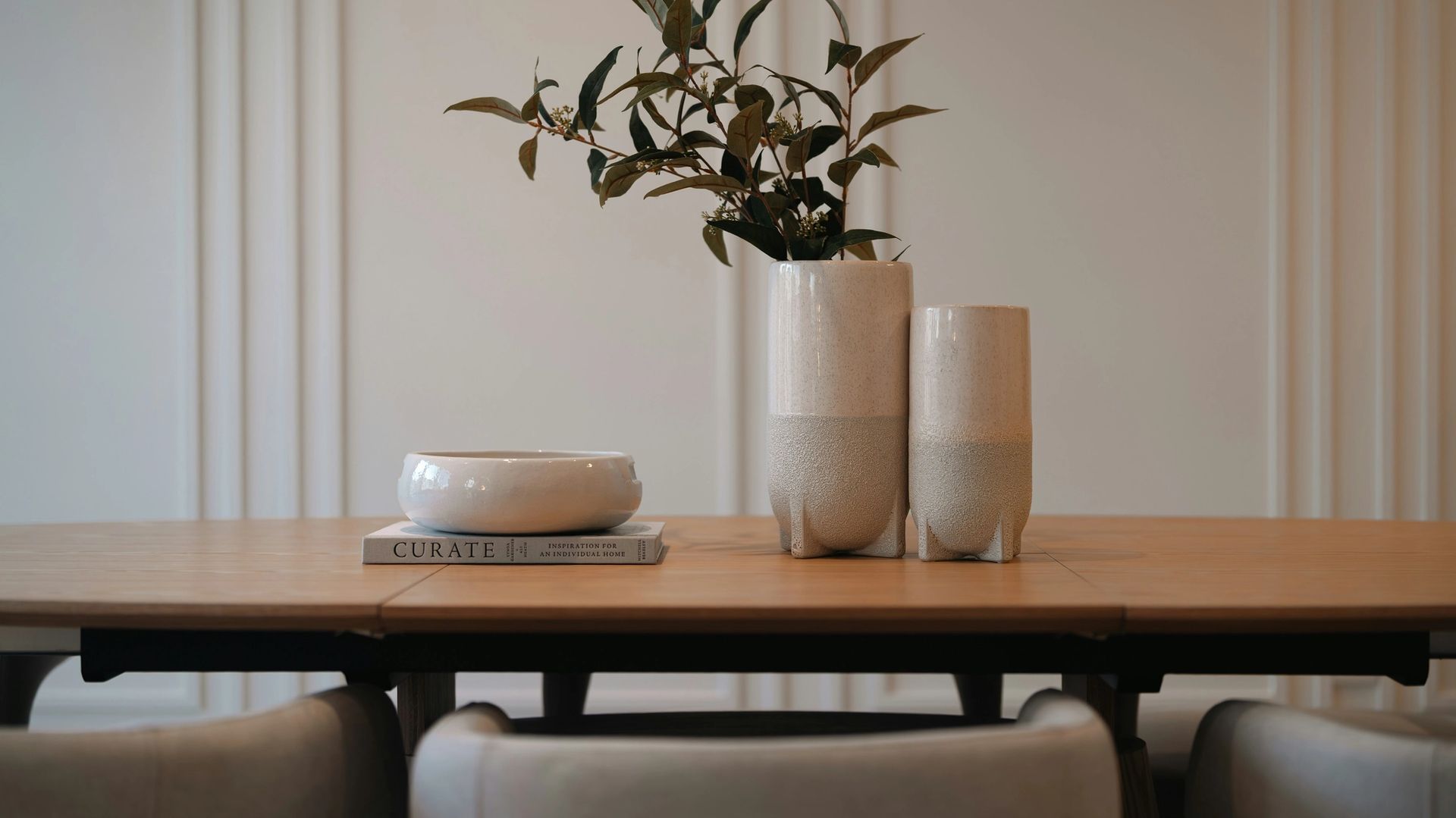
A handthrown ceramic vase, a woven basket, a piece of driftwood placed on a shelf. The slight asymmetry, the irregular surface, the evidence of a human hand in the making — these things communicate the philosophy quietly and immediately. Place it somewhere you will see it daily. Let it be a reminder that a room does not need to be finished to be beautiful. That is, in essence, the whole idea.
3. Understanding Wabi Sabi: The Philosophy Before the Aesthetics
What "Wabi" and "Sabi" Actually Mean
The two words have distinct meanings that combine into something greater than either alone.
Wabi refers to a kind of rustic simplicity: the beauty found in the modest, the humble, the understated. It is the satisfaction of a hand-thrown bowl over a factory-made one. The pleasure of a worn wooden worktop over a polished marble one.
Sabi is the beauty that comes with time and use. The patina on an old brass handle. The way a linen sofa softens and creases after a year of being sat in properly. The moss growing between the flagstones in a garden.
Together, wabi sabi describes a worldview: find beauty not in spite of age and wear, but because of it.
How Wabi Sabi Differs from Minimalism and Japandi
These three styles are often discussed together, but they ask very different things of a space.
Minimalism is about reduction and order. It tends toward the calm and the cool, and it requires a level of discipline about what is allowed to be visible. Evidence of daily life is generally tidied away.
Japandi blends Japanese and Scandinavian design sensibilities: clean lines, warm neutrals, functional beauty. It is intentional and considered, with a fairly clear visual language that rewards careful curation.
Wabi sabi is softer and far less prescriptive than either. It welcomes the worn, the faded, the slightly uneven. It does not require aggressive decluttering or a matched palette. Where minimalism and Japandi both have a sense of arrival, a finished state to aim for, wabi sabi is more interested in the ongoing quality of a space: the way it accumulates meaning and character over time.
Three Principles to Design By
Return to these whenever you are making a decision about your space:
- Nothing lasts. Choose materials that age gracefully, raw wood, linen, unglazed ceramics, rusted iron. Surfaces that develop character with use are central to the philosophy.
- Nothing is finished. A wabi sabi room does not need to be "done." The layered, gathered-over-time quality is not a work in progress, it is the destination. The room is allowed to keep evolving.
- Nothing is perfect. Asymmetry is welcome. A visible repair, a knot in the wood, a slightly uneven glaze on a ceramic: these are qualities to notice, not problems to solve.
4. Core Furniture for a Wabi Sabi Home
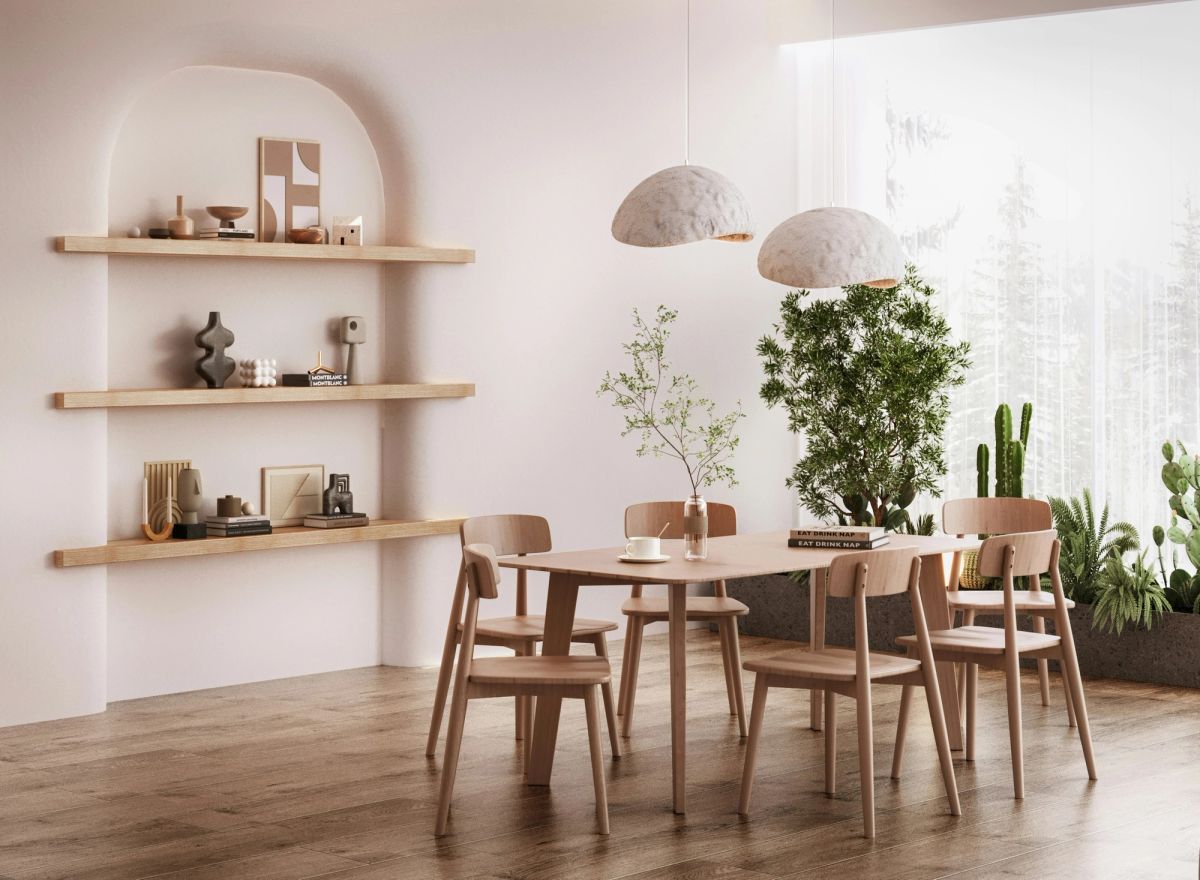
The furniture principles of wabi sabi are straightforward: natural materials, visible grain and texture, low-profile silhouettes, and nothing that looks like it came from a matching suite. Buying secondhand fits the philosophy beautifully. So does mixing eras.
Category 1: Seating
Wabi sabi seating should feel lived-in almost from the moment it arrives. Think linen upholstery, natural rattan, low-slung frames in solid wood with a visible grain. Look for pieces where the construction is honest, where the joinery is part of the design rather than hidden behind upholstery or lacquer.
Accessible pick (£229):
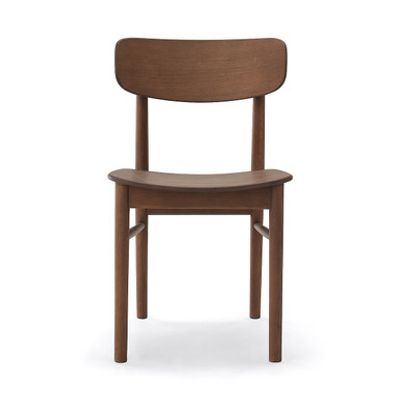
The Brown Oak Round Leg Chair from Muji is a reliable starting point for anyone furnishing a first flat or wanting to add a calm, intentional corner to an existing room. The round-leg oak frame has a quiet, unpretentious quality, nothing about it is trying too hard, and the warm brown tone sits comfortably within a wabi sabi interior without dominating it. Where mass-produced chairs rely on hidden metal frames and synthetic finishes that cannot age gracefully, this one lets the material do the talking.
Premium pick (£1,087):
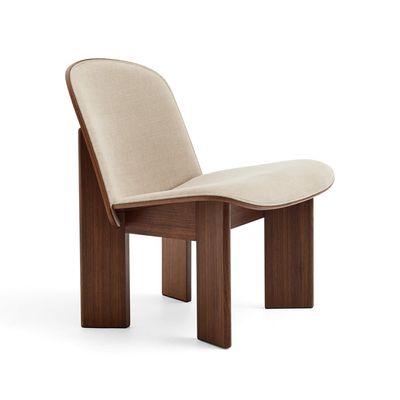
For a sitting room or bedroom reading corner where you want one piece to do real visual work, the HAY Chisel Lounge Chair Front Upholstered in water-based lacquered walnut with Linara 216 fabric, available from Holloways of Ludlow, is worth considering seriously. The Chisel's solid walnut frame has a hand-carved quality, and the front upholstery adds warmth without concealing the structure — the visible joinery is part of the story. This is a chair that will look better at year five than it does on day one, which is exactly what the philosophy asks for.
Bench as alternative seating (£815):
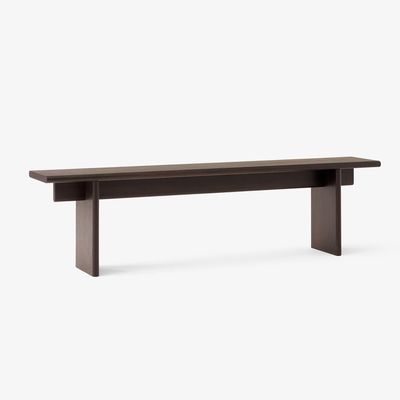
In a dining space or hallway where you want seating that reads as sculptural rather than strictly functional, the &Tradition OS5 & OS6 Ita Dining Bench in Dark Stained Oak, also from Holloways of Ludlow, is a considered choice. The solid wood construction, the clean but not clinical lines, and the slight variation in the timber surface give it an honesty that upholstered dining chairs, which require more careful maintenance and tip a room toward something more formal, simply cannot replicate. A bench like this invites use. It does not ask to be kept pristine.
Category 2: Storage and Shelving
Wabi sabi storage is honest, it does not hide everything behind closed doors. Open shelving with curated, imperfect arrangements is central to the look. Choose raw wood, aged metal, or hand-built pieces over flat-pack laminates. Visible grain, knots in the timber, and any slight irregularity in the construction are all welcome. The arrangement on the shelves matters too: things should look gathered over time rather than styled in an afternoon.
Category 3: Tables and Surfaces
In a wabi sabi home, the table surface is allowed to show its history. A ring from a mug, a scratch from a key, these are marks of a life being lived rather than damage to be repaired. Choose solid materials with natural variation: stone, reclaimed wood, raw concrete, solid walnut.
Side table (£439):
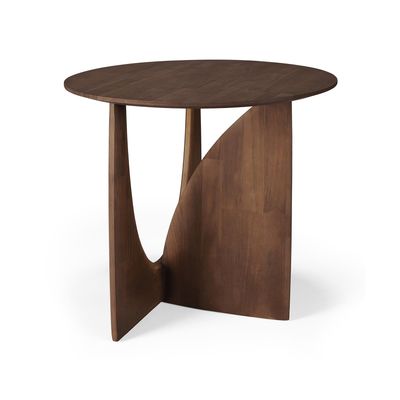
Placed next to the HAY Chisel or beside a bed, the Ethnicraft Geometric Side Table in teak brown, available from Holloways of Ludlow, contributes to the room visually rather than simply occupying space. The geometric form has an artisan, almost sculptural quality, considered without being fussy, and the solid teak construction means it will develop a patina with use. Glass-topped or lacquered side tables require constant maintenance to look their best; this one improves with neglect.
Dining table (£749):
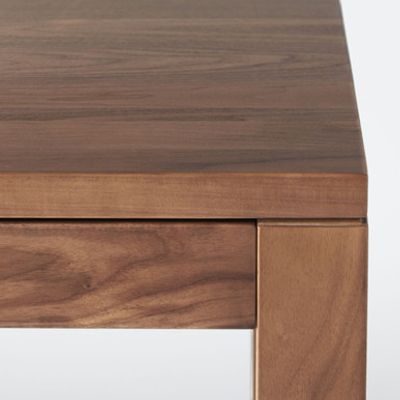
For a kitchen-diner or dedicated dining room where you want a surface that earns its place over time, the Natural Walnut Table from Muji at 140cm does what no painted or laminate surface can: the walnut grain deepens and warms with age and use. The natural finish means any marks that appear over the years add character rather than read as damage. Extending tables in painted MDF chip and show their joins within a couple of years; a solid walnut surface tells a different story entirely.
Coffee table (£1,015):
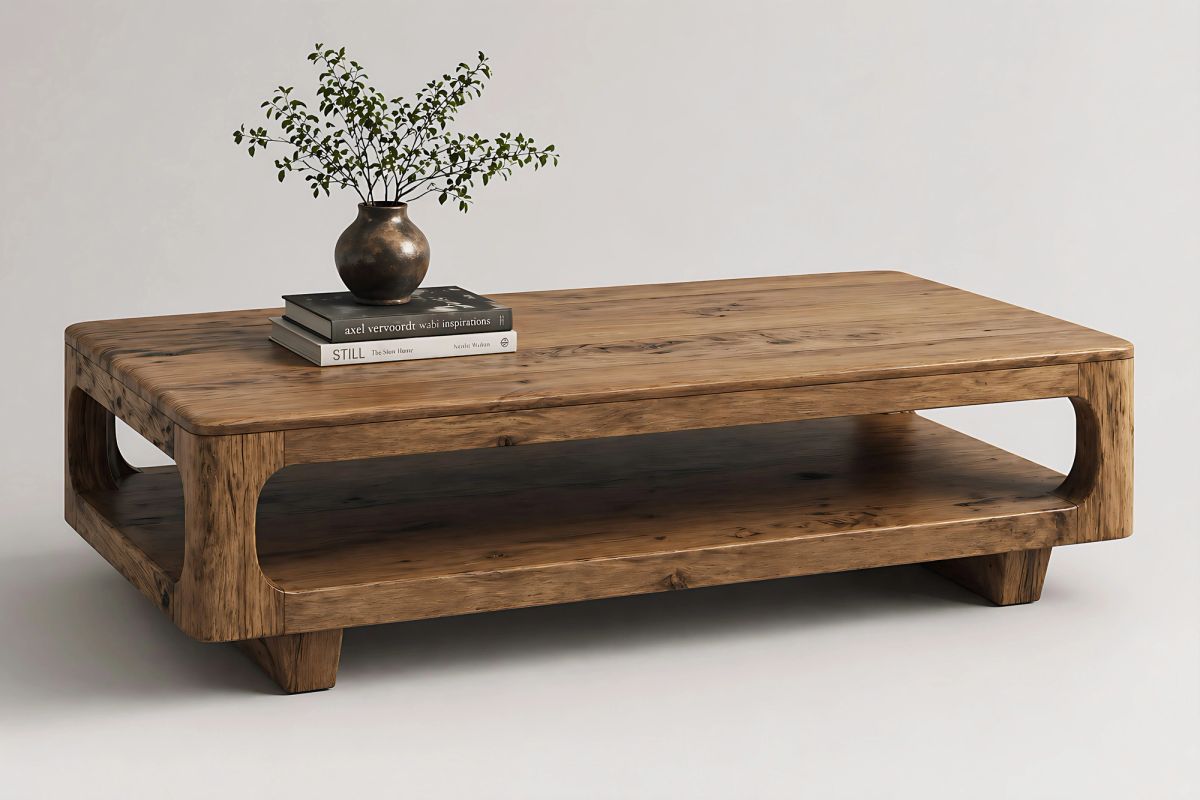
For a sitting room anchored around a low-profile sofa or floor cushions, the &Tradition OS3 & OS4 Ita Coffee Table, from Holloways of Ludlow, resolves the tension between wanting a beautiful surface and a genuinely usable one. The solid timber and the slightly irregular grain pattern mean no two tables are identical, which sits at the heart of what the philosophy values. Marble or glass coffee tables show every fingerprint and require a level of attention that does not suit the wabi sabi approach. This one asks for neither.
5. Lighting and Colour in a Wabi Sabi Space
Colour Palette
Wabi sabi colour is not chosen from a trend forecast. It is borrowed from the natural world: the grey of unbleached linen, the warm brown of dried clay, the soft sage of aged moss, the off-white of chalk. These are tones that have always existed and will continue to exist regardless of what appears in the season's paint collections.
The key principle: avoid bright white. Pure white reads as clinical and finished, a quality that sits at odds with what wabi sabi values. Reach instead for warm whites, stone, taupe, aged cream. In UK paint terms, look for anything described as chalky, earthy, or muted. The palette should feel as though it has faded gently, like a room that has absorbed years of afternoon light through old glass.
For walls, underpainted or limewash finishes work particularly well. They absorb light rather than reflect it, and they develop slight variation across the surface as they dry, no two sections look identical, which is entirely in keeping with the philosophy.
For fabric and soft furnishings, undyed or naturally dyed linen, raw cotton, and woven jute carry the palette beautifully. Avoid anything with a sheen, or any fabric that reads as polished or synthetic.
Lighting
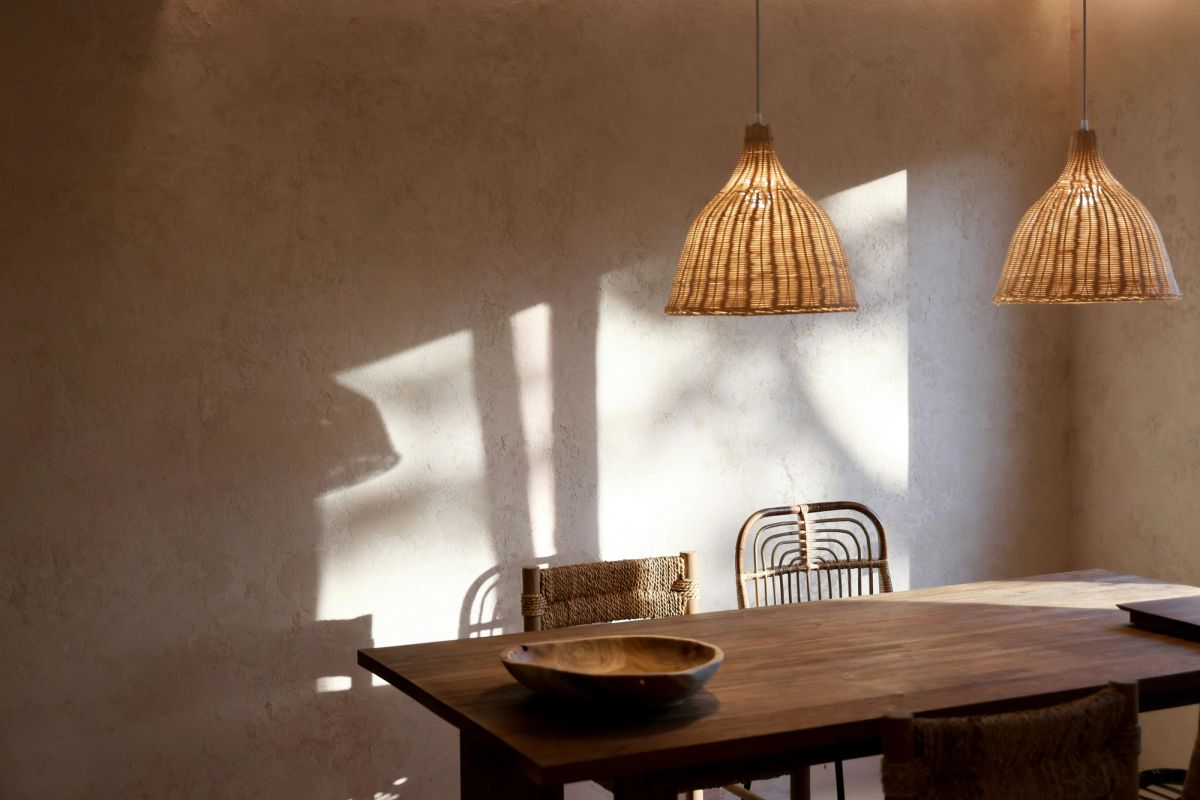
Light quality matters as much as colour in a wabi sabi space. The goal is warmth and softness, the quality of late afternoon sun, or candlelight. Avoid cool white bulbs, recessed downlighters, and anything that floods a room with even, clinical illumination.
Instead: low-hanging pendants, warm filament bulbs, and shades made from natural materials that filter rather than broadcast light.
Budget pick (£56):
For a sitting room or bedroom where you want to add warmth without a large spend, the Lightsin Wabi-Sabi Style Hand-woven Rattan Pendant Light from Living and Home is a solid starting point. The texture of the hand-woven rattan shade diffuses the light softly, creating the kind of warm pool of illumination that is central to a wabi sabi atmosphere. Bare bulb pendants or glass shades send light in every direction rather than gathering it into something intentional, this one does the opposite.
Mid-range pick (£140):
Above a dining table or in a space where you want presence without showiness, the Quitani Shiro LED Hanging Light, available from Lights.co.uk, has a handcrafted quality and considered proportions that sit comfortably within the aesthetic. The warm glow through the shade creates exactly the softened, intimate light that wabi sabi interiors call for, quite different from statement metallic pendants, which read as too finished and too deliberate for this approach.
Statement pick (£462):
When the light fitting is part of the composition rather than purely functional, the MARKET SET Pebble Textile Hanging Light in Cream (58cm), from Lights.co.uk, earns its place in a sitting room or bedroom. The cream textile and the rounded, organic form sit comfortably within the wabi sabi palette and sensibility, and the 58cm diameter gives it presence without weight. Rattan or wicker pendants can tip into a more coastal aesthetic; this one reads as quieter and more considered.
6. Styling and Accessories: The Finishing Touches
Accessories in a wabi sabi home are never decorative for decoration's sake. Each object should have a reason to be there, whether that is usefulness, meaning, or genuine beauty.
A few principles:
Edit, but do not strip. Wabi sabi is not minimalism. A shelf with three objects thoughtfully placed is right. A shelf with one lonely object is trying too hard. A shelf crammed with things you no longer notice is something else. Find the middle ground.
Layer textures, not colours. Because the palette is muted, the interest comes from surface variety. A rough ceramic bowl next to a smooth stone. A loosely woven throw over a linen cushion. A dried stem arrangement beside a worn wooden tray. The variety of textures is what gives the eye somewhere to rest.
Let things be imperfect. A vase slightly off-centre. Books stacked horizontally and vertically. A plant allowed to trail rather than trained to be tidy. The arrangement should look gathered, not styled.
Bring the outside in. Dried botanicals, pebbles, a branch of something interesting, a bowl of pinecones. These are not clichés in a wabi sabi context, they are entirely the point.
Shop What Is Wabi Sabi Interior Design? A Beginner's Guide to Emb
Muji
Brown Oak Round Leg Chair
£229 at MujiBrown Oak Round Leg Chair: Honest materials and simple craftsmanship make it an easy fit for a wabi sabi home.
Holloways of Ludlow
HAY Chisel Lounge Chair Front Upholstered - Linara 216 in Water-based lacquered walnut
£1087.2 at Holloways of LudlowDesigned to age beautifully, with materials that only get better over time.
Holloways of Ludlow
&Tradition OS5 & OS6 Ita Dining Bench - Dark Stained Oak
£815 at Holloways of LudlowDark stained oak and timeless design bring effortless wabi sabi character.
Holloways of Ludlow
Ethnicraft Geometric Side Table - Teak brown
£439 at Holloways of LudlowNatural teak grain makes every table subtly unique.
Muji
Natural Walnut Table
£749 at MujiA walnut table that develops warmth and character with everyday use.
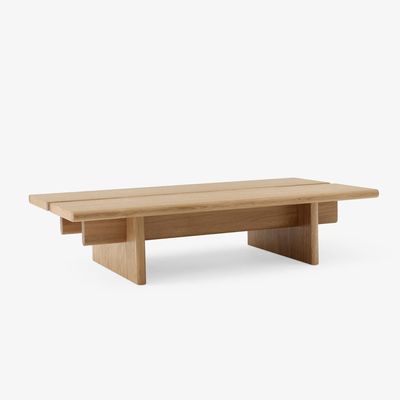
Holloways of Ludlow
&Tradition OS3 & OS4 Ita Coffee Table
£1015 at Holloways of LudlowSolid timber and natural grain make this a timeless wabi sabi centrepiece.
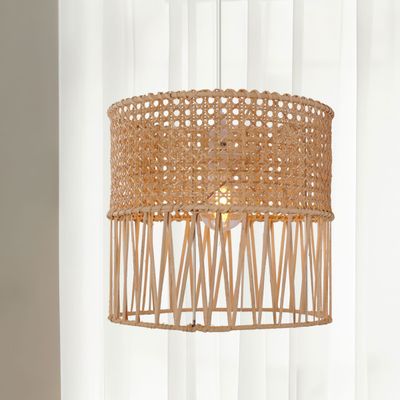
Living and Home
Lightsin Wabi-Sabi Style Hand-woven Rattan Pendant Light
£56 at Living and HomeHand-woven rattan adds natural texture and character at an affordable price.
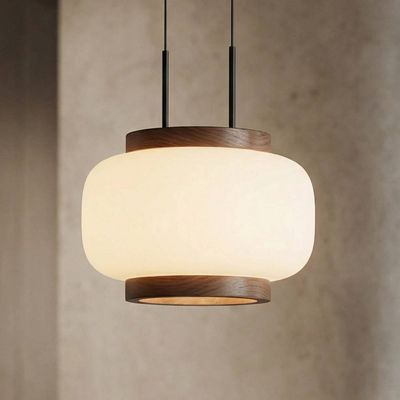
Lights.co.uk
Quitani Shiro LED hanging light
£139.9 at Lights.co.ukA handcrafted look with warm, understated light that feels beautifully timeless.
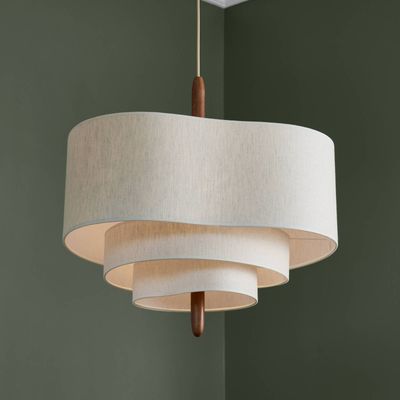
Lights.co.uk
MARKET SET Pebble textile hanging light
£462 at Lights.co.ukSoft curves and textured fabric make this a standout wabi sabi statement.
This article contains affiliate links. We may earn a small commission at no extra cost to you.
7. Frequently Asked Questions
Is wabi sabi the same as boho or rustic?
Not quite. Bohemian interiors tend toward maximalism and pattern. Rustic often refers to a specific regional style, exposed beams, stone floors, a particular sense of place. Wabi sabi is quieter and more philosophical than either. It is about intentional imperfection, not simply a visual mood.
Can I apply wabi sabi principles in a new-build?
Yes. The philosophy is about how you inhabit and layer a space, not the age of the building. A new-build with raw wood shelving, linen curtains, and a handmade ceramic collection sits comfortably within the aesthetic.
Do I need to spend a lot to achieve this look?
No. Buying secondhand is arguably more in keeping with wabi sabi than buying new. A reclaimed dining table with existing wear carries exactly the kind of honest history the philosophy values.
8. Final Thoughts
Wabi sabi will not transform your home overnight, and it is not supposed to. It is a slow shift in how you see the space you already have. The original floorboards. The inherited chest of drawers. The walls that have absorbed years of light and living.
None of these are problems waiting to be solved. They are evidence of a home that has been lived in, which is the only kind of home worth having.
Start with one thing. A handmade object. A warm light. A surface you stop trying to keep perfect. The rest tends to follow.
A quick note: some of the links in this article are affiliate links. That means if you click through and buy something, I might earn a small commission, it doesn't add anything to your price. I only ever link to products I actually rate, so you can trust that nothing here is included just to fill a list. Thanks for reading and for supporting the site.

Nicky Alger
Founder & Editor
Design-obsessed, boat-dwelling adventurer who studied interior design and now spends her time turning bland spaces into something truly special. When not writing about interiors, you'll find her travelling or hunting down beautifully designed spaces for inspiration.
Not Sure Where to Start?
Get our weekly newsletter with design tips, trend reports, and curated product picks—perfect for beginners and design enthusiasts alike.